Dosan Media
도산 안창호 기록관
No. 2 of 4
Riverside, Redlands, Pasadena, San Francisco
1903–1920
Pachappa Was a Labor Camp
Not a Koreatown, not the Mecca of the Independence Movement, not Dosan's Republic. A migrant labor camp of shanties that emptied after the 1913 freeze, and the two 1908 Sanborn maps that show Redlands had the mission, the labor bureau and the businesses.
The leader
I have openly challenged, and still challenge, anyone from UC Riverside and the City of Riverside to a public debate about Pachappa Camp. Why are they hiding? It is a hoax.
Look at the two 1908 Sanborn maps. Why is there no Korean mission on the 1908 Riverside map? The Korean Methodist Mission at Redlands was established in 1906, before the Riverside Presbyterian Mission, and it is clearly identified on the 1908 Redlands map, with a Korean labor bureau, a Korean laundry and ten Koreans living at the Casa Loma Hotel. Why does the book call the living quarters at Pachappa 'buildings' when Sanborn calls them 'shanties'? Pachappa was a ghetto of crudely built shacks. How does that qualify as a town?
Chang is not the first person to discover the 1908 map. Lee Sun Ju published it in 2006 in Rainbow Over the Pacific, page 228, Vol. 1. A framed copy has been hanging in the Dosan Memorial Hall in Seoul since long before Chang says he discovered it in 2016.
A thousand Koreans in Riverside? There were never 1,000 Pioneer Generation Korean residents in Riverside. There are no US immigration statistics reporting 1,000 Koreans in the entire State of California when Pachappa was a labor camp. Dosan did not find Pachappa. Yi Kang and Im Jung Ki did.
Philip Ahn Cuddy
Look at these two
Document · 1908 · Redlands, California
1908 Redlands Sanborn map: the Korean Methodist Mission, outlined
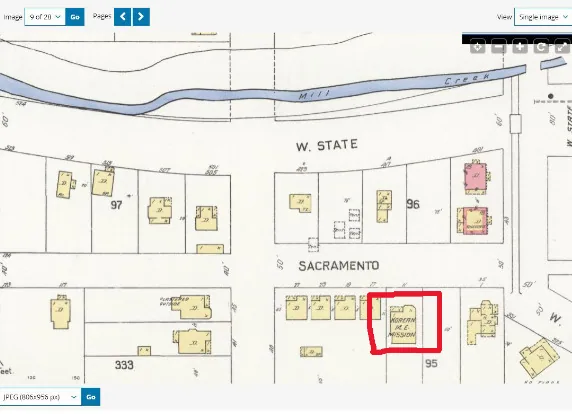
The 1908 Sanborn Fire Insurance map of Redlands, W. State and Sacramento streets. The Korean Methodist Episcopal Mission at 11 Sacramento Avenue is boxed in red.
Besides the photo of the Korean Mission in Redlands in 1906, this Mission is clearly identified on the 1908 Redlands Sanborn Fire Insurance Map. Redlands' Korean community was more advanced than Riverside's. The first KNA convention was held in Redlands in 1909.
Why is there no inclusion of the Redlands 1908 map in Pachappa Camp? Records indicate Redlands had a more developed Korean community in 1908.
Philip Ahn Cuddy · Verified primary record
Document · 1908 map; annotated 2023 · Riverside, California
1908 Riverside Sanborn map: no Korean mission
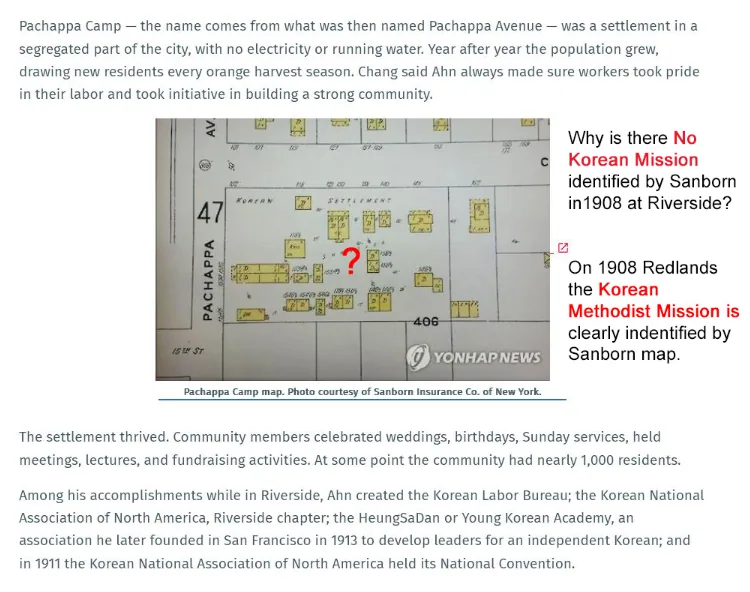
The 1908 Sanborn Fire Insurance map of the Pachappa block, as reproduced in a press article about the Koreatown claim, with my note in red: why is there no Korean mission identified by Sanborn in 1908 at Riverside?
UC Riverside, the City of Riverside, the South Korean Consulate and the South Korean American media all claim Edward Chang is an expert. Why is there no Korean Mission on the 1908 Riverside Sanborn Fire Insurance map?
Why does Pachappa Camp and Lee Sun Ju call the living quarters at Pachappa 'buildings' when Sanborn determines them as 'shanties'? Pachappa was a ghetto with crudely built shacks. How does a migrant labor camp qualify as a "town"?
"Settlement" is a term the Sanborn Maps Company used for insurance actuaries, not a sociological finding. Sanborn wrote Chinatown or Spanishtown when the criteria called for it. It did not write town here.
Philip Ahn Cuddy · Verified primary record
The lead record
Document · Census of 1910 and 1920, table printed 1933
Every Korean on the US mainland in 1910: 462
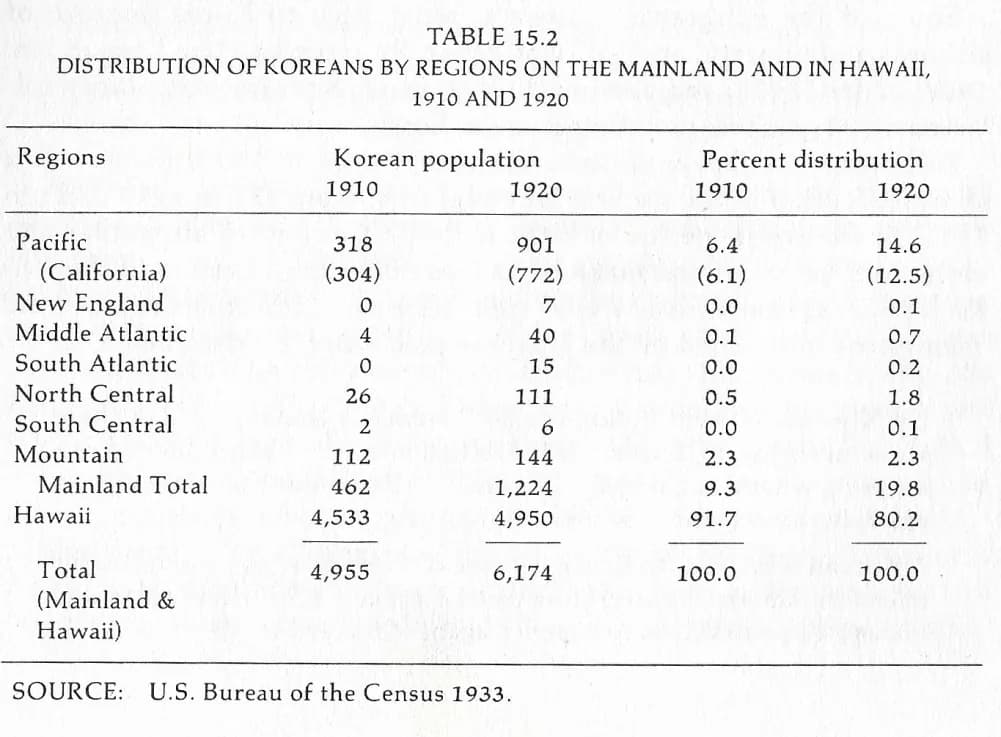
US Census table 15.2, distribution of Koreans by region on the mainland and in Hawaii, 1910 and 1920. California: 304 in 1910, 772 in 1920. The whole mainland: 462 in 1910, 1,224 in 1920.
There were never 1,000 Pioneer Generation Korean residents in Riverside. There are no US immigration statistics reporting 1,000 Koreans in the entire State of California when Pachappa was used as a labor camp. Jill Cowan of the New York Times printed 1,000 at Pachappa. The Census counted 304 in the whole state.
Philip Ahn Cuddy · Table reproduced on slide 20 of Press-Conference-Pachappa.pptx (Philip Ahn Cuddy) · Verified primary record
The rest of the file
Document · 2006 · Riverside, California
The same map, published in 2006
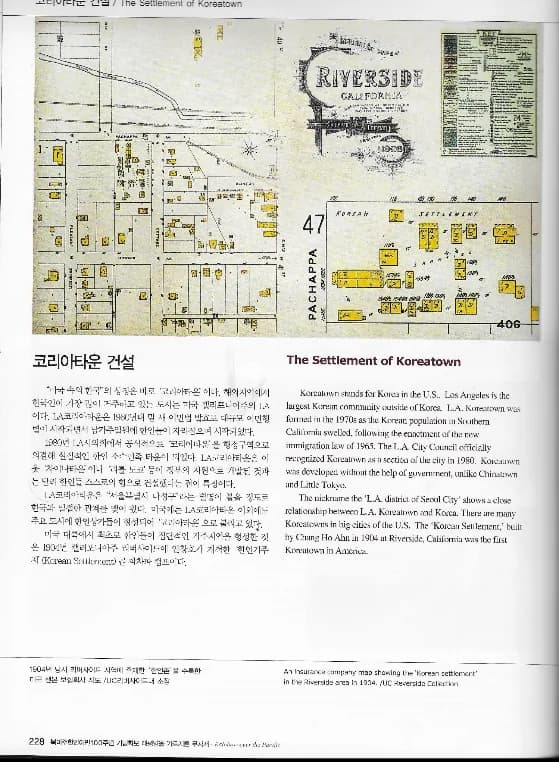
The 1908 Riverside Sanborn map as printed on page 228 of Rainbow Over the Pacific, Vol. 1, Korean Christian Herald, 2006. Ten years before Edward Chang says he discovered it.
Chang is not the first person to discover the 1908 Sanborn Fire Insurance Map. Lee Sun Ju, who Chang uses as a reference, published the 1908 Riverside Sanborn map in 2006 in the Korean Christian Herald's Rainbow Over the Pacific, page 228, Vol. 1.
A framed copy of the 1908 Sanborn Map has been hanging in the Dosan Memorial Hall in Seoul, given to Manager Choi Jong Ho when he visited Riverside, long before Chang claims he discovered the map in 2016.
UC Riverside's own words: "The story of Pachappa Camp was not known until Dr. Chang discovered a 1908 Sanborn Insurance map depicting the 'Korean Settlement.'" How can Chang discover a map that had been published and framed?
Philip Ahn Cuddy · Verified primary record
Document · 16 August 2002 · Falls Church, Virginia
2002: the “First Koreatown on the U.S. Mainland” was Reedley/Dinuba
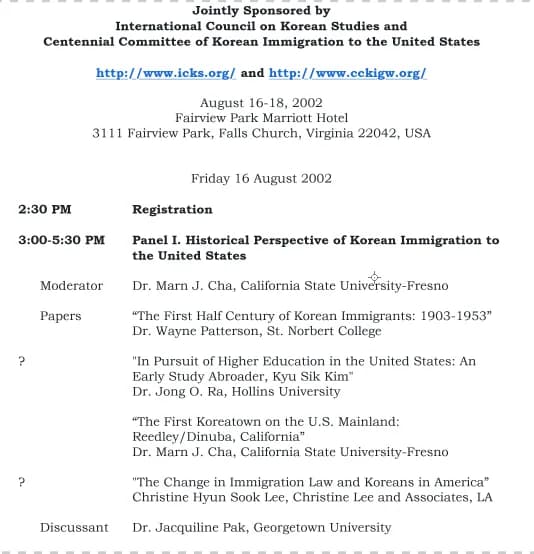
Programme of the International Council on Korean Studies conference, Falls Church, Virginia, 16 August 2002. Panel 1, paper: “The First Koreatown on the U.S. Mainland: Reedley/Dinuba, California”, Dr. Marn J. Cha, California State University, Fresno.
Fifteen years before the City of Riverside designated Pachappa, Korean studies scholars had already named a first Koreatown, and it was not Riverside. Chang did not discover anything new.
Philip Ahn Cuddy · Reproduced on slide 3 of Press-Conference-Pachappa.pptx (Philip Ahn Cuddy) · Verified primary record
Document · 16 June 1907 · Redlands, California
Dosan to his wife at Redlands, 16 June 1907
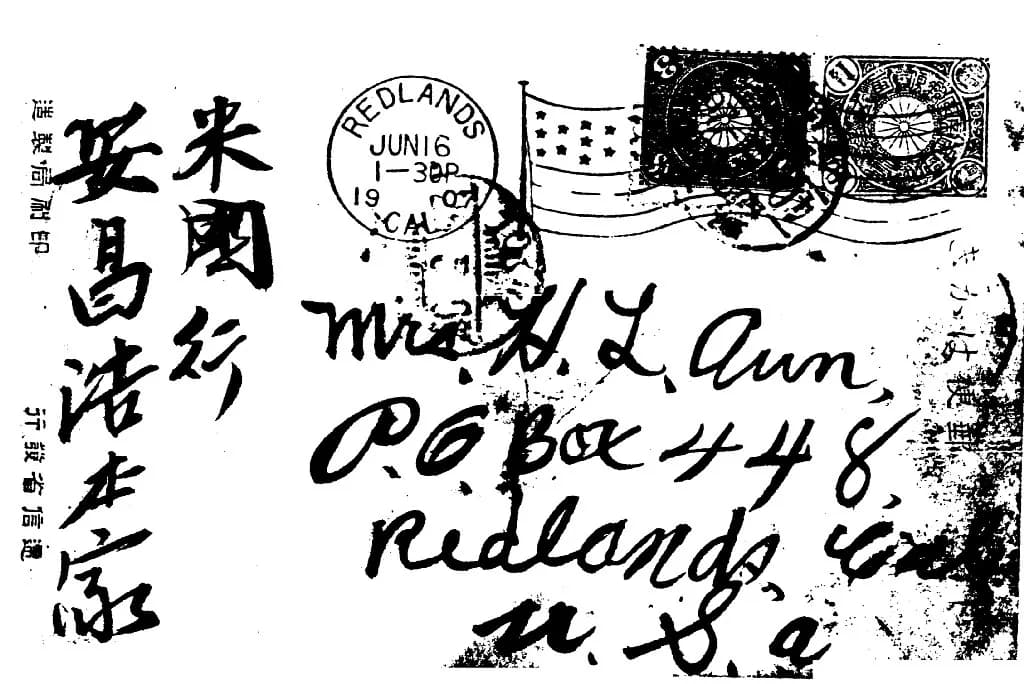
The envelope of a letter from Dosan in Korea to Yi Hye Ryon in California, addressed to Mrs. H. L. Ahn, P.O. Box 448, Redlands, and postmarked Redlands, 16 June 1907.
What survives is the envelope, not the letter. It is enough. In June 1907 my grandmother was living in Redlands with her son Philip, not in Riverside. The book Pachappa Camp says on page 3 that "Dosan's family reside[d] in Riverside". The post office said Redlands.
Dosan had gone back to Korea. This is the earliest of the long separations his organizing work required.
Philip Ahn Cuddy · Verified primary record
Document · Written 20 May 1907, received 11 June 1907 · Redlands, California
Dosan to his wife at Redlands, written 20 May 1907
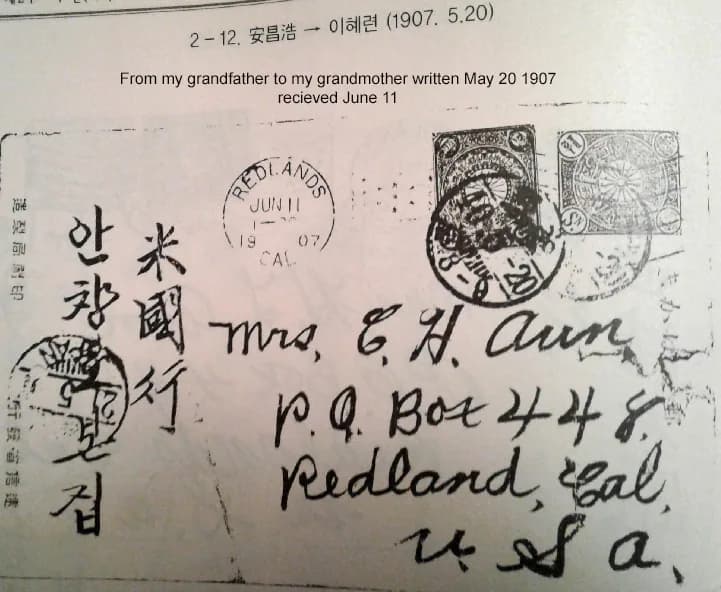
A second envelope from my grandfather in Korea to my grandmother, Mrs. C. H. Ahn, P.O. Box 448, Redlands, California. Written May 20, 1907, received June 11.
Two envelopes, three weeks apart, both to Redlands. Page 3 of Pachappa Camp says the family resided in Riverside.
Philip Ahn Cuddy · Captioned on slide 32 of Press-Conference-Pachappa.pptx (Philip Ahn Cuddy) · Verified primary record
Photograph · 1906 · Redlands, California
Korean Methodist Episcopal Mission, Redlands, 1906
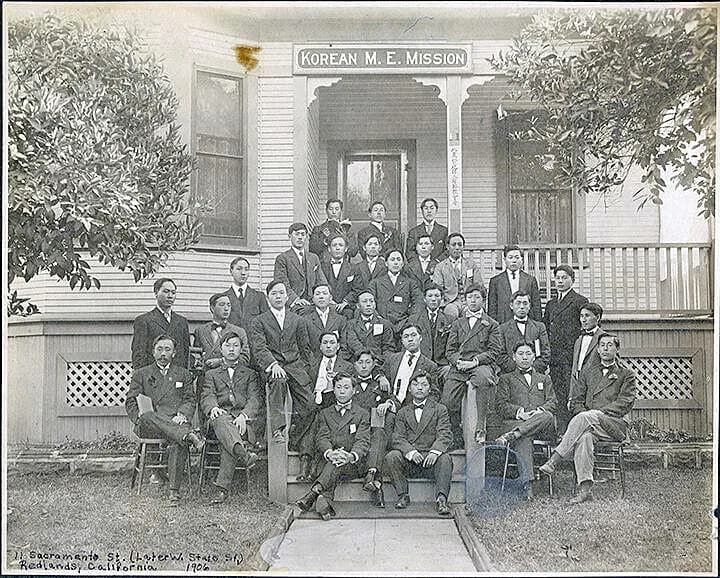
Thirty people outside the Korean Methodist Episcopal Mission at Redlands, established 1906. Rev. Pang Hwajung on the right, back row. Rev. Yim Choon Ku standing to the left of the man in the dark suit.
Established before the Riverside Presbyterian Mission. Published in 2006 in Rainbow Over the Pacific, page 47, Vol. 3.
Riverside was not the only place in southern California with women. Redlands had women and families.
Philip Ahn Cuddy · Verified primary record
Document · 1908 · Redlands, California
Redlands, 1908: where the Koreans lived
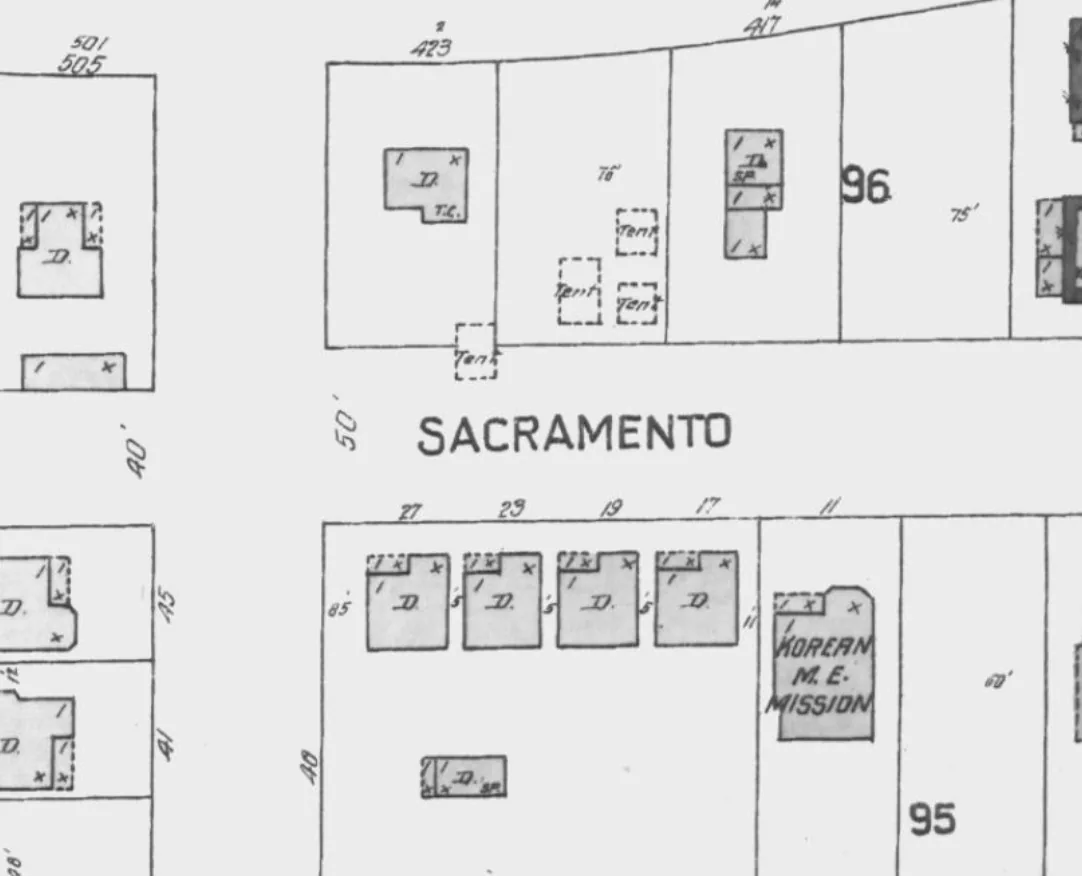
The 1908 Redlands Sanborn map at W. State and Sacramento. Wonbo Lee lived at 505 W. State, upper left. The last building on the right is the Korean Methodist Episcopal Mission at 11 Sacramento Avenue.
Philip Ahn Cuddy · Verified primary record
Document · 1908 · Redlands, California
Korean Labor Bureau, 201 Sylveria St., Redlands
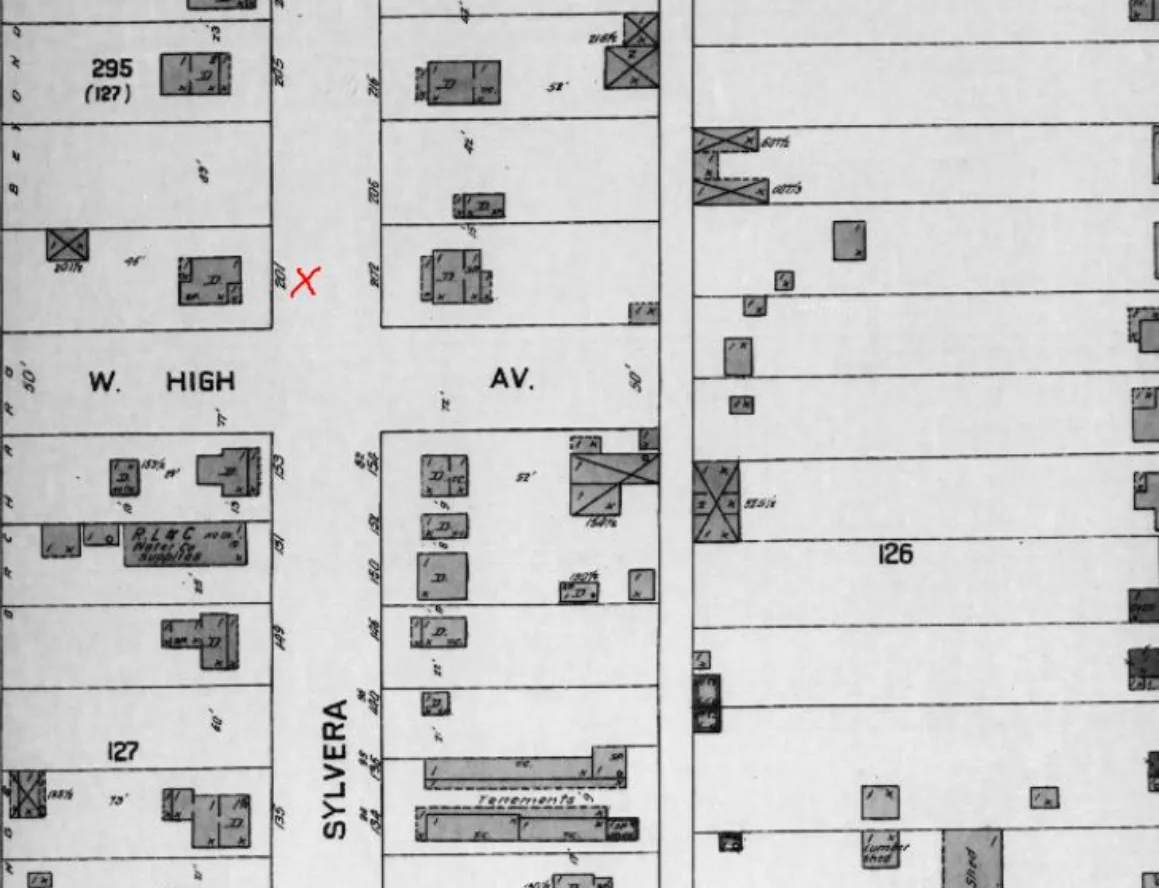
The Korean Labor Bureau office at 201 Sylveria Street, Redlands, on the 1908 Sanborn map. The bureau was started in San Francisco in 1903 as part of the Chinmokhoe; there was an office in Redlands as well as Riverside.
The Korean Labor Bureau was initiated as part of the Chinmokhoe in San Francisco, established in 1903. Dosan was the president. Besides San Francisco and Riverside there was a KLB office in Redlands.
The Chinmokhoe labor agency sent Yi Kang, Im Jung Ki, Chung Jae Kwon and Im Chi Keong as a citrus work test team to Riverside before Dosan went there. Yi Kang and Im Jung Ki found Pachappa Camp. Not Dosan.
Philip Ahn Cuddy · Verified primary record
Document · 1908 · Redlands, California
A Korean laundry in Redlands Chinatown, 1908
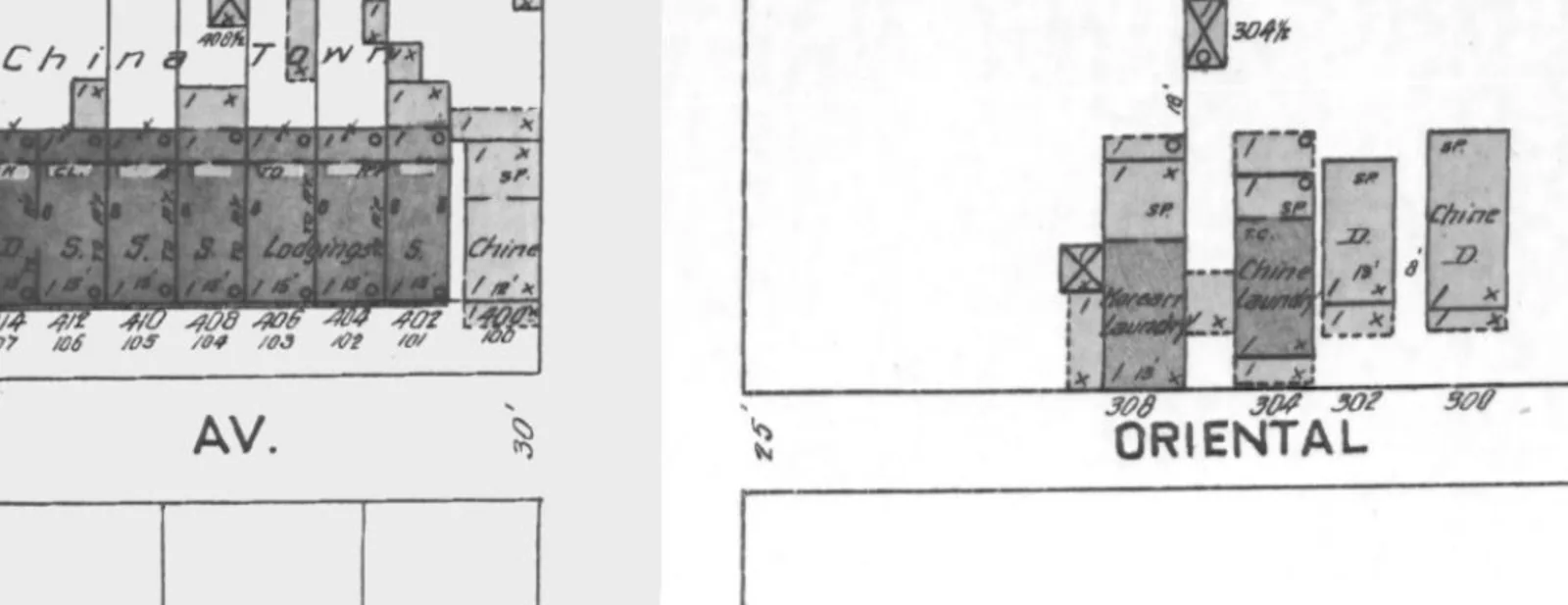
Redlands Chinatown at the corner of Lugonia and Oriental Avenue on the 1908 Sanborn map. A Korean laundry at 308 Oriental Avenue; a Chinese laundry next door at 304.
Philip Ahn Cuddy · Verified primary record
Document · 1908 · Redlands, California
Casa Loma Hotel, 1 Colton Avenue, Redlands
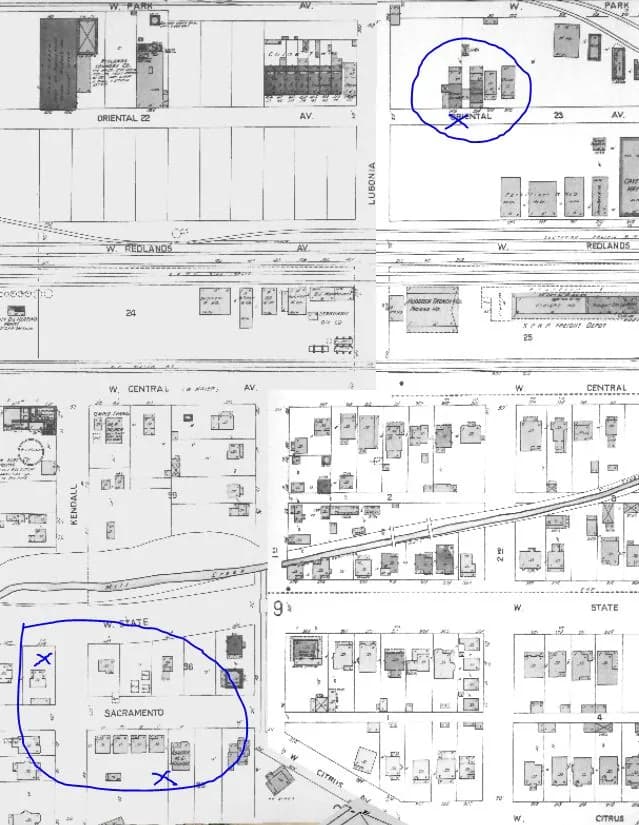
The Casa Loma Hotel at 1 Colton Avenue, upper right on the 1908 Redlands Sanborn map. Ten Koreans worked and lived at this hotel. Lower left: the Korean ME Mission and Wonbo Lee's home.
Philip Ahn Cuddy · Verified primary record
Document · Undated · Reche Canyon, California
The Korean settlement at Reche Canyon
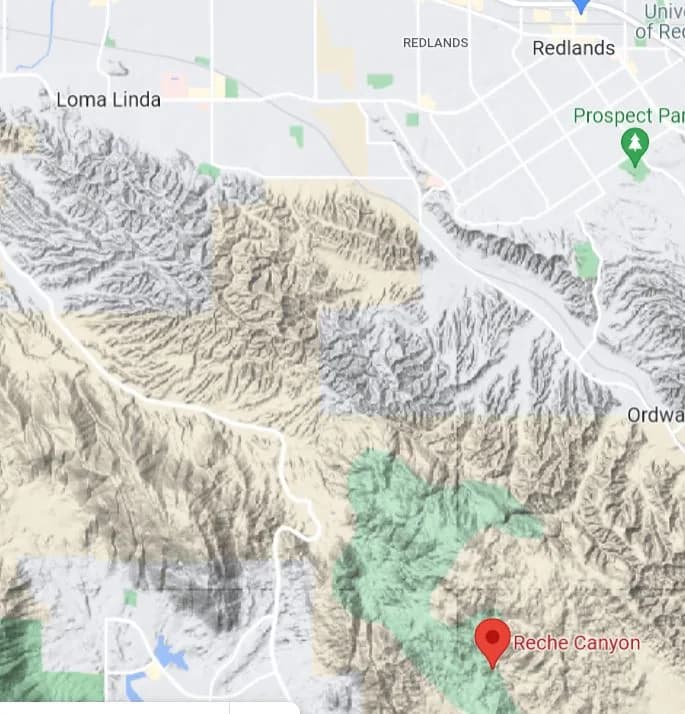
A Korean settlement southwest of Redlands and east of Riverside, at Reche Canyon. One of the other Korean settlements the First Koreatown claim leaves out.
The existence of other Korean settlements was overlooked or overshadowed. There is no exclusive support for claiming Riverside is some central critical location during the Independence Movement. Singling Riverside out is a convoluted portrayal of the patriotic spirit and history of Pioneer Koreans in America.
Philip Ahn Cuddy · Held, not yet sourced
Document · 1899–1920
Korean aliens admitted to the United States, 1899–1920
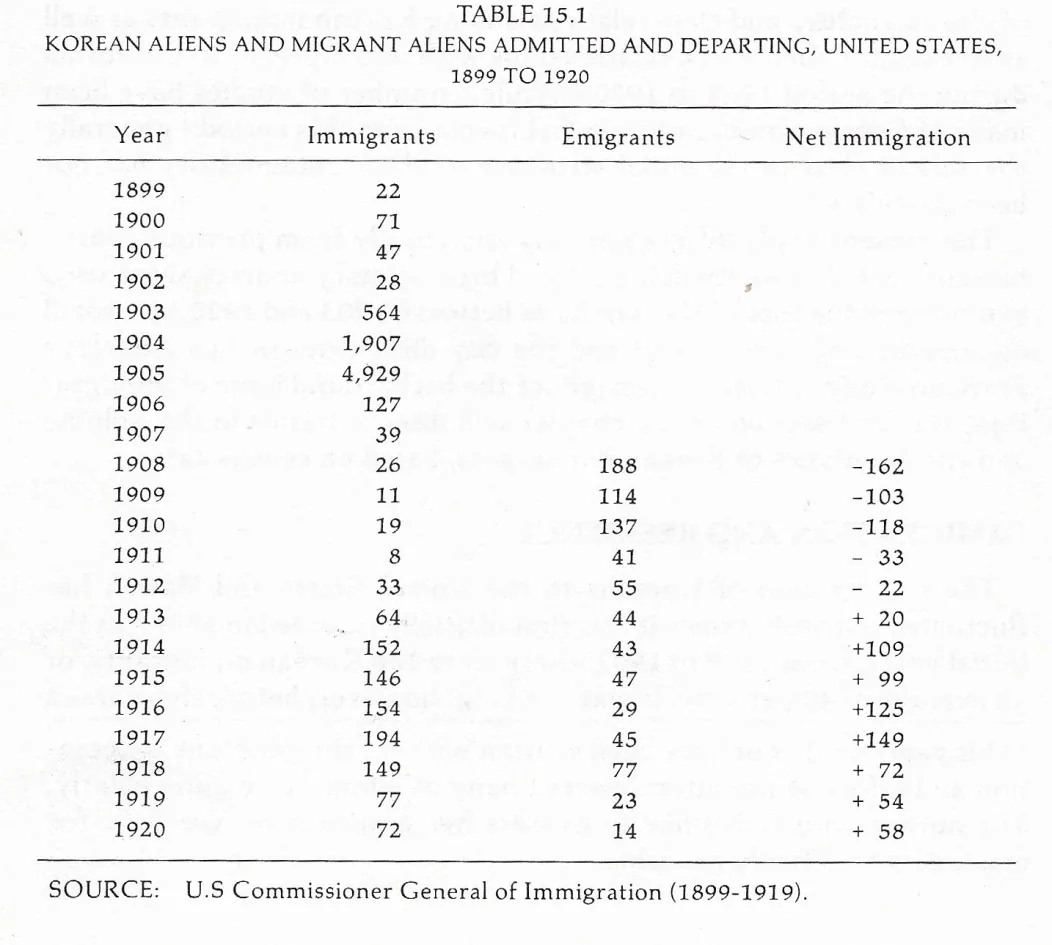
Table 15.1: Korean aliens and migrant aliens admitted and departing, United States, 1899 to 1920, from the US Commissioner General of Immigration. 1905: 4,929 admitted, the peak. 1906: 127. 1907: 30.
The Hawaii plantation migration of 1903–1905, then almost nothing. The people at Pachappa came from that pool. There was no stream of a thousand into Riverside.
Philip Ahn Cuddy · Table reproduced on slide 20 of Press-Conference-Pachappa.pptx (Philip Ahn Cuddy) · Verified primary record
Document · 10 February 1909 · San Francisco, California
Shinhan Minbo, 10 February 1909
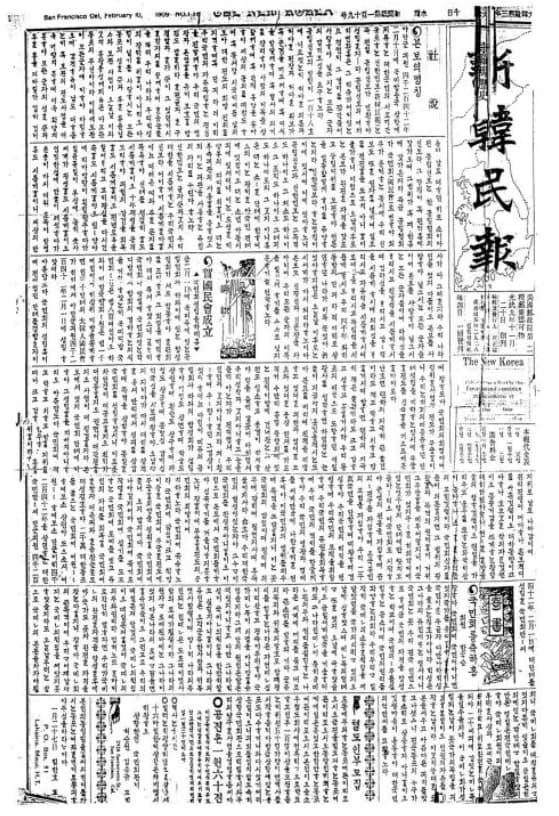
A page of the Shinhan Minbo (The New Korea), San Francisco, 10 February 1909, the Korean National Association's newspaper. The paper Edward Chang's graduate interns translated for him.
The Shinhan Minbo has been researched for decades by qualified researchers. It was written in archaic Korean using regional satori and Hanmun; meaning and characters are easily misinterpreted.
The missing October 11th, 1911 issue clearly conflicts with Chang's claims about Dosan's family waiting in Riverside when he arrived in 1911. Dosan met his family in Dinuba before stopping in Los Angeles for a welcome party.
Philip Ahn Cuddy · Verified primary record
Photograph · 1911 · Riverside, California
Korean National Association meeting, Riverside, 1911
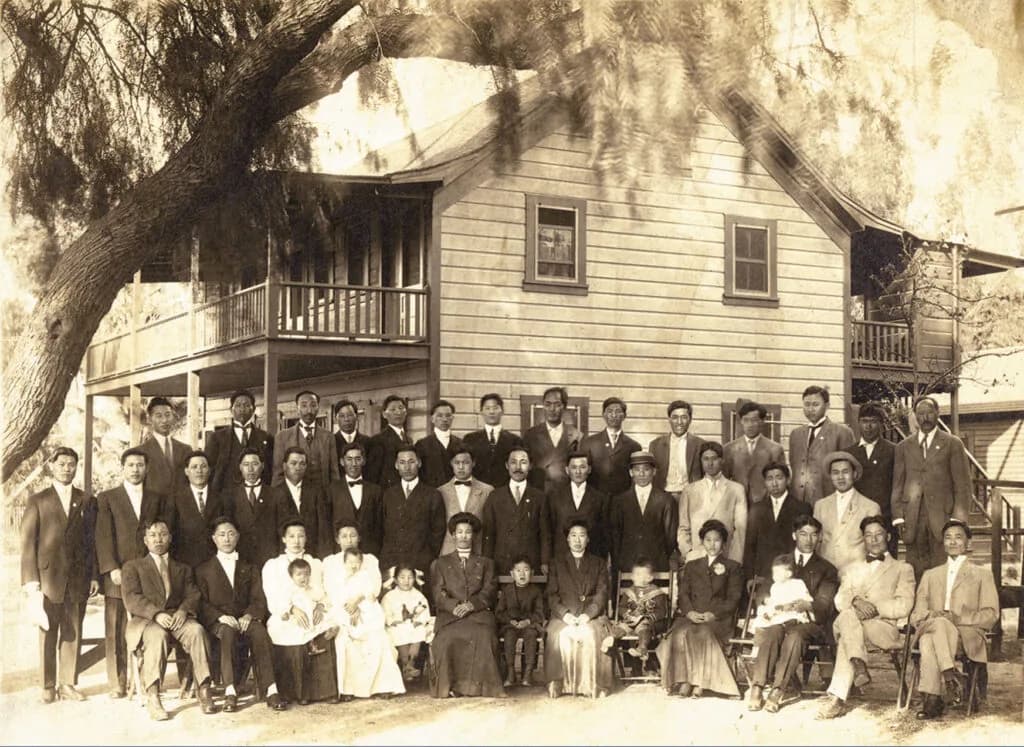
The photograph UC Riverside prints as the Korean National Association of North America convention at Riverside in 1911, credited to the Korean American Digital Archive at USC, and the Independence Hall of Korea prints as the KNA meeting at Pachappa Camp. Riverside Labor Agency, KNA meeting, 1911.
The third KNA convention was at Riverside. The first was at Redlands in 1909, the second at Claremont in 1910, the fourth and largest at San Francisco in 1912. The 1911 convention made Los Angeles the KNA headquarters.
This is one of the pictures UC Riverside uses. Almost every image they use originated from the Helen Ahn Collection I manage.
Philip Ahn Cuddy · Helen Ahn Collection · Slides 34, 37 and 38 of Press-Conference-Pachappa.pptx (Philip Ahn Cuddy); UCR captions it 'Korean National Association of North America Convention in 1911' · Verified primary record
Document · 1993
Ellen Thun to Susan: “The Heartwarmers get more heartaches”
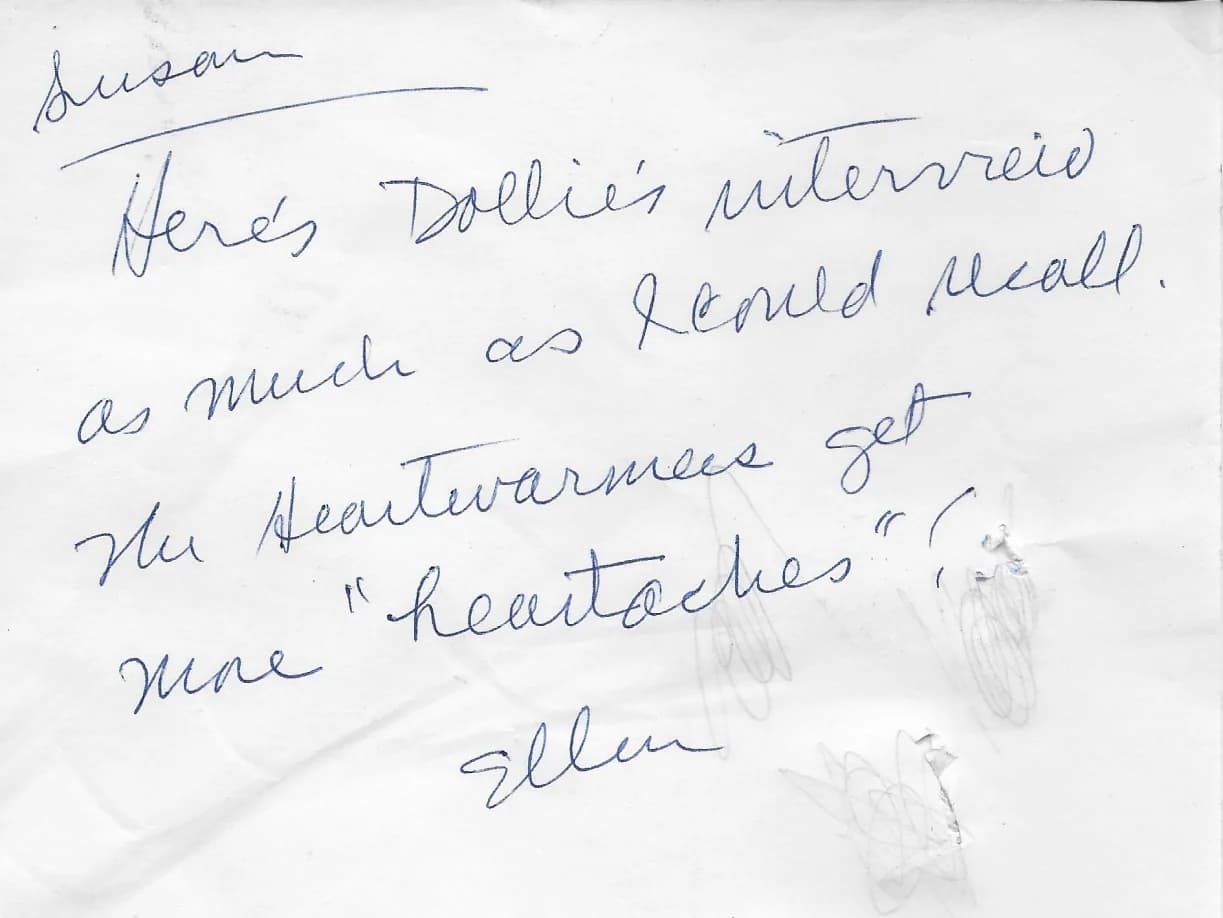
A handwritten note from Ellen Thun to Susan Ahn Cuddy: “Susan — Here's Dollie's interview as much as I could recall. The Heartwarmers get more 'heartaches'! Ellen.”
The story of Pachappa based on Ellen Thun's Heartwarmers is not the whole story. It is propaganda from dishonest people in Riverside who are hiding the truth. Susan Ahn Cuddy and Philip Cuddy worked on almost every Heartwarmers Ellen Thun wrote.
Philip Ahn Cuddy · Slides 28–30 of Press-Conference-Pachappa.pptx (Philip Ahn Cuddy) · Verified primary record
Document · Source publication not identified
Redlands, 26 December 1905. Riverside, 16 March 1906.
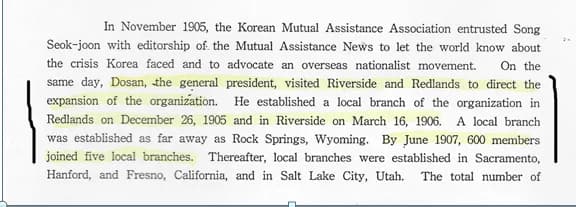
A passage, marked up by the family, recording when the Korean Mutual Assistance Association opened its local branches. Redlands came first, in December 1905. Riverside followed the next March.
The passage reads: “In November 1905, the Korean Mutual Assistance Association entrusted Song Seok-joon with editorship of the Mutual Assistance News to let the world know about the crisis Korea faced and to advocate an overseas nationalist movement. On the same day, Dosan, the general president, visited Riverside and Redlands to direct the expansion of the organization. He established a local branch of the organization in Redlands on December 26, 1905 and in Riverside on March 16, 1906. A local branch was established as far away as Rock Springs, Wyoming. By June 1907, 600 members joined five local branches.”
Redlands first, December 1905. Riverside three months later. Draft until the book this page comes from is named, because a chronology has to carry its source.
Publication not identified · A page reproduced in the family's press-conference material. The source publication is not identified there.