The Story1878–1938
Who he was, from the documents I hold.
My grandfather did not pick oranges, found a Koreatown, or arrive from Hawaii. He organized Koreans wherever he stood, went home to fight, and died for it. This is his life, year by year.
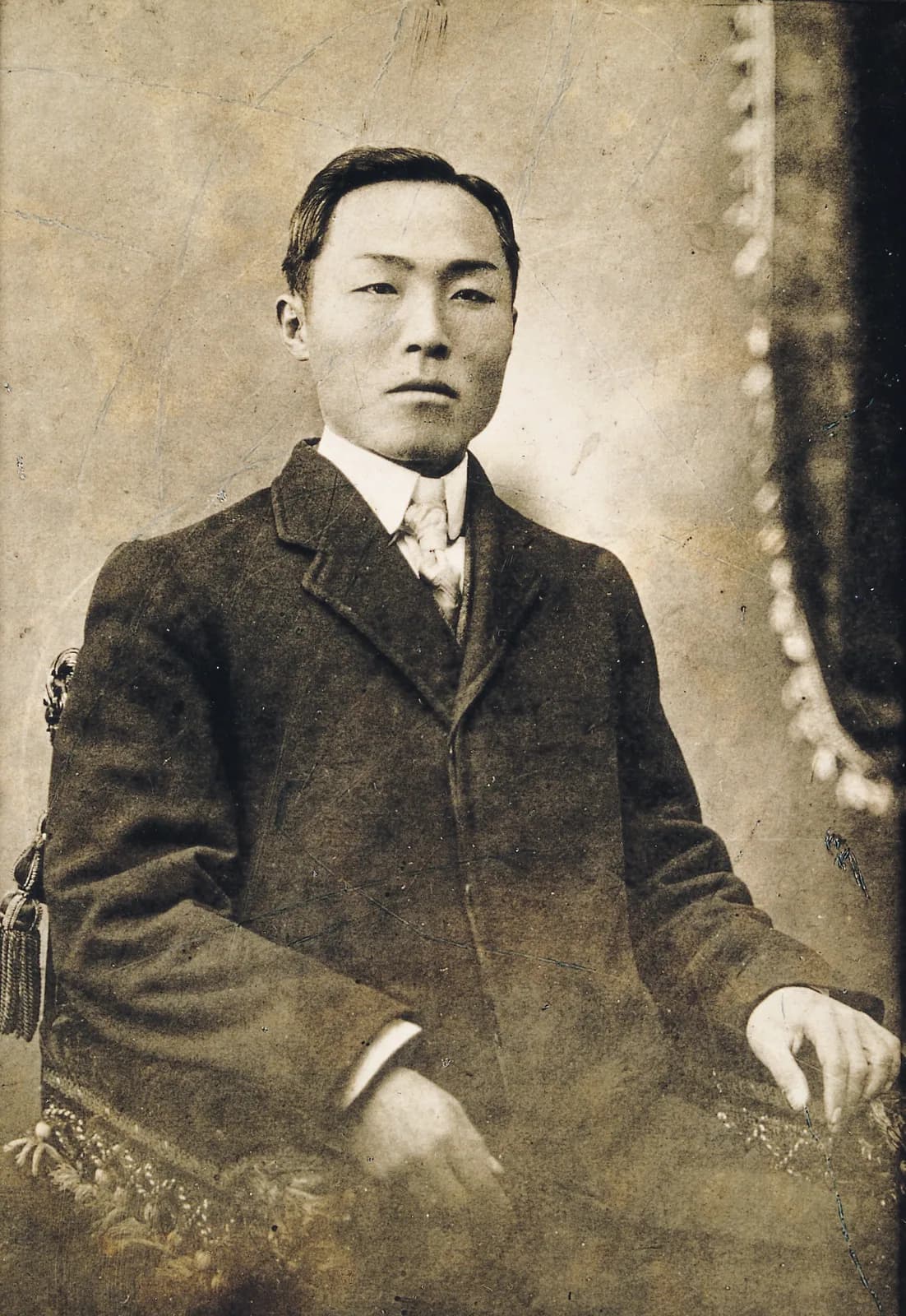
November 9Born on Dorong Island, 7-li Chori ward, Gangseo county of Pyongnam Province (now North Korea), the third son of Ahn Heung Kuk (Kyo Jin) of the Sunhung Ahn clan and Hwang Mongun of the Osong Hwang clan of Jeahn. His oldest brother was Ahn Chi Ho; his second older brother died young (perhaps Ahn Chi Yong); his sister was Ahn Shin Ho, born in 1884.
Seven years old, he begins his schooling in traditional Chinese studies at Guk Su Dang on the shores of the Dae Dong River in Pyongyang. He works as a shepherd.
Ahn Heung Kuk, Dosan’s father, dies when Dosan is eleven years old.
Thirteen years old, he learns Chinese from Master Kim Hyun Jin at a village school, where he meets Pil Dae Eun of Anak, Hwanghae Province, who introduces him to new ways of looking at the world.
Sixteen years old, he goes to Seoul and enters the Miller Academy on Sobudae Jong-dong, where he studies English, Western civilization and Christianity. He converts to the Presbyterian Church, and he convinces Pil Dae Eun to become a Christian as well.
(The Miller Academy was originally called the Underwood Academy. When Dosan attended, Rev. F. S. Miller was the principal, hence the name. After Dosan graduated it was called Gu Se (Salvation) Academy, and later Kyung Shin (New Respect) School.)
Eighteen years old, he continues to study at the Miller Academy and works as a teaching assistant.
(This year the Independence Newspaper (Tong Nip Shin Mun) is first published by Philip Jaisohn (Soh Jae Pil), and the Independence Association (Tong Nip Hyup Hoe) is formed.)
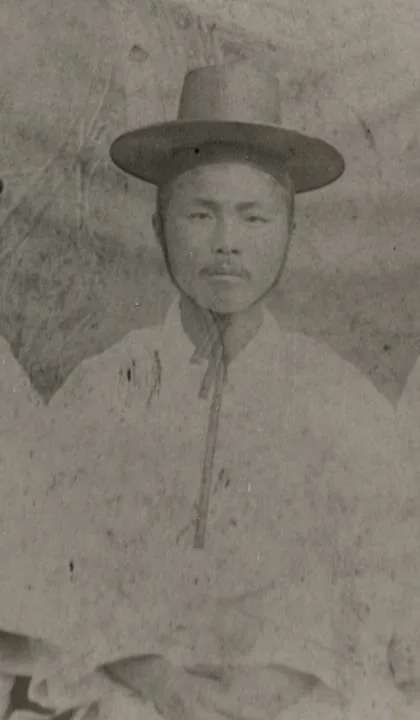
Nineteen years old, he joins Philip Jaisohn’s Independence Association and establishes its West Pyongyang branch, the Mahn Min Gong Dong Hoe (Ten Thousand People Community Association).
Twenty years old, he makes the Quae Jae Jung speech for the Pan National Coalition: “18 satisfactory pieces of news and 18 unsatisfactory pieces of news.” The speech distinguishes him as a superb orator.
Later that year he makes a speech in Jongno, Seoul, criticizing seven officials in the King’s court who signed the Korea-Japan New Agreement, and suggests six items for political reform.
Twenty years old, he makes the Quae Jae Jung speech for the Pan National Coalition: “18 satisfactory pieces of news and 18 unsatisfactory pieces of news.” The speech distinguishes him as a superb orator.
Later that year he makes a speech in Jongno, Seoul, criticizing seven officials in the King’s court who signed the Korea-Japan New Agreement, and suggests six items for political reform.
He is engaged to marry Lee Hye Ryon (later Helen Ahn), daughter of his former teacher Lee Sukbo. His fiancée and his sister go to Seoul to attend Jongshin Girls’ School.
December(The Independence Association is shut down by King Gojong.)
Twenty-one years old, he establishes Jeom Jin (Deliberate Progress) School in Amhwa Village, Dongjin ward, Gangseo county, Pyongnam Province: the first modern school in the county, and the first coeducational school in Korea.
He initiates a land development company and establishes Dan Po Ri Church, later Ki Yang Church.
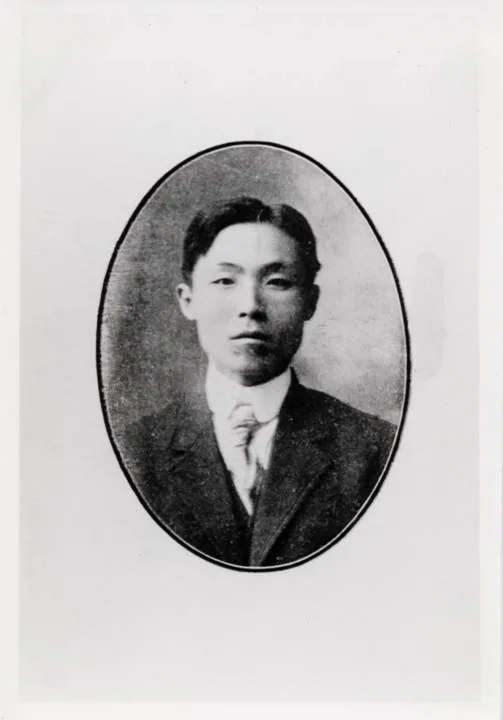
September 3Twenty-four years old, he marries Lee Hye Ryon at Je Jung Won (House of Universal Helpfulness) Hospital in Seoul, arranged by Kim Yoono, Maria Kim’s uncle, and conducted by Reverend Miller.
September 4He and his wife embark for America to study education. They spend one week in Tokyo. Near the Hawaiian Islands he coins his pen name, Dosan.
October 14They arrive in San Francisco. He enrolls in a public elementary school and works as a houseboy.
Twenty-five years old, he organizes the Han In Chin Mok Hoe (Korean Friendship Society) in San Francisco and becomes its chairman.
Twenty-six years old, he and his wife move to Riverside, California. He studies English and Christianity at a Bible study center and works as a “school boy,” a domestic worker.
February(The Russo-Japanese War begins.)
March 28His first son, Philip Ahn, is born in Highland Park, near Los Angeles.
April 5The Korean Friendship Society is reorganized into the Kong Nip Hyup Hoe (Mutual Independence Association), the first politically oriented Korean organization outside Korea, and Dosan becomes its first chairman.
November 14He establishes an office for the Kong Nip Hyup Hoe on Pacific Street in San Francisco.
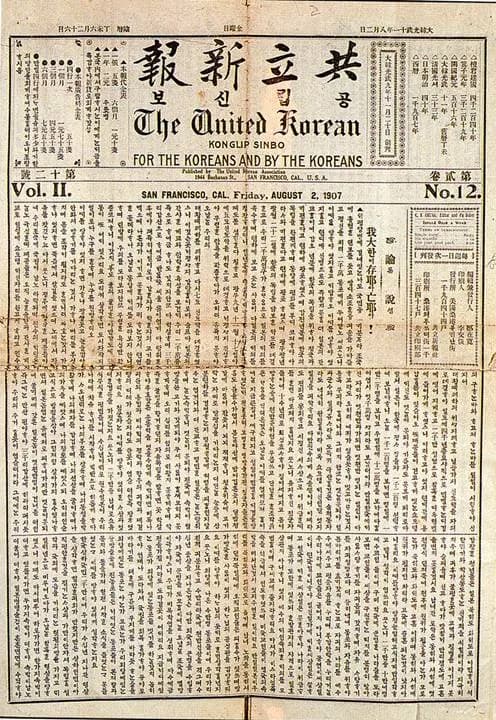
November 20He publishes the first issue of the Kong Nip Shin Bo newspaper.
(On September 5 the Treaty of Portsmouth is signed; the Russo-Japanese War ends with Japan’s victory over Russia. On November 17 the Eul Sa Jo Yak, the Protectorate Agreement of 1905, is signed, and Japan takes control of Korea’s foreign affairs.)
April 18The Kong Nip Hyup Hoe office on Pacific Street burns down in the San Francisco earthquake, and Dosan temporarily moves the office across the bay to Oakland.
(Imperial Japan sets up the Governor General’s Office to rule Korea, with Ito Hirobumi as its first governor.)
January 8Twenty-nine years old, he leaves San Francisco for Korea to find out the extent of Japan’s control.
FebruaryHis boat stops in Japan. He makes a speech about patriotism to the Tae Geuk Hak Hoe, a Korean student group in Tokyo.
February 20He arrives in Korea.
AprilHe establishes a secret society, the Shinminhoe (New People’s Association), with Lee Dong-nyung, Lee Shi-young, Ahn Tae-guk, Lee Seung-hoon, Kim Ku, Shin Chae-ho and other prominent patriots. Dosan serves as the judge of incoming members.
May 12He makes a speech about the world powers, explaining their policies and plans, and asserts that Korea should prepare for war.
May 20He discusses Korea’s future with members of the Tae Geuk Hak Hoe in Tokyo.
January 8Twenty-nine years old, he leaves San Francisco for Korea to find out the extent of Japan’s control.
FebruaryHis boat stops in Japan. He makes a speech about patriotism to the Tae Geuk Hak Hoe, a Korean student group in Tokyo.
February 20He arrives in Korea.
AprilHe establishes a secret society, the Shinminhoe (New People’s Association), with Lee Dong-nyung, Lee Shi-young, Ahn Tae-guk, Lee Seung-hoon, Kim Ku, Shin Chae-ho and other prominent patriots. Dosan serves as the judge of incoming members.
May 12He makes a speech about the world powers, explaining their policies and plans, and asserts that Korea should prepare for war.
May 20He discusses Korea’s future with members of the Tae Geuk Hak Hoe in Tokyo.
JuneHe makes a speech about improving houses and building model farms.
July 8He makes a speech about the importance of education for girls at Myung Ryun Dang, at an event sponsored by the Pyongyang Research Society for Women’s Education.
August 1Imperial Japan dissolves the Korean army. Korean troops resist, and Japanese soldiers open fire near Seoul Station. Dosan rescues and treats the wounded Korean soldiers and gets them to Severance Hospital.
OctoberHe discusses plans for activities in the Far East with Yi Gang.
NovemberHe meets Governor General Ito Hirobumi, and declines Ito’s proposal to form a cabinet to rule Korea together.
JanuaryHe establishes the Northwest Students Society, the first youth movement organization in Korea.
MarchHe tours Korea and makes plans with his colleagues for the Shinminhoe.
March 23Jang In-hwan and Jeon Myung-woon assassinate Durham Stevens, foreign affairs advisor to the Japanese Governor General, in San Francisco. Stevens had been campaigning in the United States for Japanese control of Korea.
JanuaryHe establishes the Northwest Students Society, the first youth movement organization in Korea.
MarchHe tours Korea and makes plans with his colleagues for the Shinminhoe.
March 23Jang In-hwan and Jeon Myung-woon assassinate Durham Stevens, foreign affairs advisor to the Japanese Governor General, in San Francisco. Stevens had been campaigning in the United States for Japanese control of Korea.
September 26He opens the Dae Sung School in Pyongyang. He installs Yoon Chi-ho as its principal and takes a supporting role himself.
SeptemberHe forms the Masan Ceramics Company with Lee Deok-hwan and Kim Nam-ho, the funders of the venture in Pyongyang. He establishes the Tae Geuk publishing company and bookstores in Pyongyang, Seoul and Daegu, with Ahn Tae-guk in charge.
October 2He initiates Asia Industries, Inc. to support the independence movement in the Far East. The company is later renamed Tae Dong Industries, Inc.
January 14He makes a speech entitled “Future and Hope” at the Seoul YMCA.
February 3He instructs Dae Sung students to refuse to wave Japanese flags when King Soonjong tours the area.
AugustHe initiates the youth movement by establishing the Young Students Society, sponsored by the Shinminhoe.
January 14He makes a speech entitled “Future and Hope” at the Seoul YMCA.
February 3He instructs Dae Sung students to refuse to wave Japanese flags when King Soonjong tours the area.
AugustHe initiates the youth movement by establishing the Young Students Society, sponsored by the Shinminhoe.
October 26Ahn Joong-geun assassinates Governor General Ito Hirobumi at the railway station in Harbin, China.
October 31Dosan is arrested for conspiring with Ahn Joong-geun to assassinate Ito Hirobumi, and is held in Young Deung Po prison.
December 31He is released after two months.
MarchHe calls an emergency meeting of the officers of the Shinminhoe, which adopts independence war as the priority strategy to save the nation from Japan, and decides to build military bases outside Korea for the independence fighters and to establish military schools.
JulyHe arrives in Tsingtao, China, and discusses future plans for the independence movement with Yi Gap, Yoo Dong-yol and Kim Hee-sun. He composes “Kanda, Kanda, Kanda,” a song about leaving Korea.
August 24He arrives in Vladivostok and begins independence work with the Koreans in Russia.
MarchHe calls an emergency meeting of the officers of the Shinminhoe, which adopts independence war as the priority strategy to save the nation from Japan, and decides to build military bases outside Korea for the independence fighters and to establish military schools.
JulyHe arrives in Tsingtao, China, and discusses future plans for the independence movement with Yi Gap, Yoo Dong-yol and Kim Hee-sun. He composes “Kanda, Kanda, Kanda,” a song about leaving Korea.
August 24He arrives in Vladivostok and begins independence work with the Koreans in Russia.
August 29The day of shame. Japan officially annexes Korea. Koreans have no country of their own. The Korean Young Students Association is terminated by the Japanese.
December 18He forms a committee to initiate a youth group in Siberia.
January 2He discusses the establishment of a school with Koreans in Russia. He teaches history at a night school and makes a speech about patriotism.
February 7He tours Mishansien in northern Manchuria for possible sites for a military school, and returns to Vladivostok.
March 6He holds a meeting with representatives of the youth groups in Vladivostok.
August 24He arrives in London by train, having traveled from northern Manchuria through St. Petersburg and Berlin.
January 2He discusses the establishment of a school with Koreans in Russia. He teaches history at a night school and makes a speech about patriotism.
February 7He tours Mishansien in northern Manchuria for possible sites for a military school, and returns to Vladivostok.
March 6He holds a meeting with representatives of the youth groups in Vladivostok.
August 24He arrives in London by train, having traveled from northern Manchuria through St. Petersburg and Berlin.
September 2He arrives in New York and is processed through Ellis Island.
September 26He arrives in Sacramento and visits a farm run by Koreans.
September 28He arrives in San Francisco and gives a speech at a welcoming event.
NovemberHe tours the Korean communities in California.
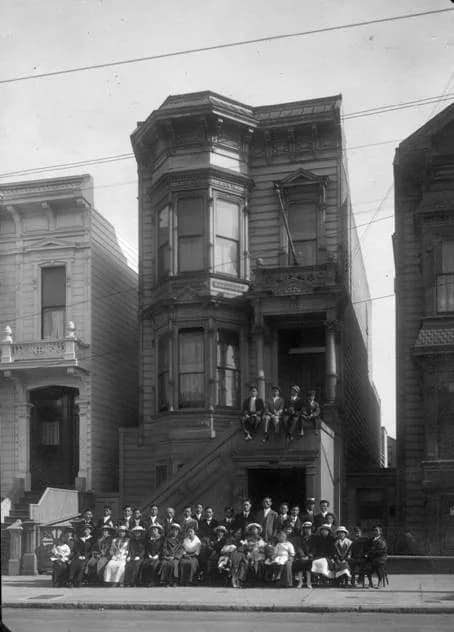
January 29With Song Chong-ik and Lim Jung-ki, he establishes the North American Industrial Company, Inc., with capital of $45,000.
July 5His second son, Philson, is born in Riverside.
November 8 to 29He organizes the Central Congress of the Korean National Association and becomes its first chairman.
May 12He makes a speech in San Francisco about the responsibility of the Korean community for the closing of the Shin Han Minbo for lack of funds.
May 13In San Francisco he forms the Hungsadan (Young Korean Academy), an organization of young elites as a core to revive the spirit of the nationalist movement. The founding members come from all eight provinces of Korea.
May 12He makes a speech in San Francisco about the responsibility of the Korean community for the closing of the Shin Han Minbo for lack of funds.
May 13In San Francisco he forms the Hungsadan (Young Korean Academy), an organization of young elites as a core to revive the spirit of the nationalist movement. The founding members come from all eight provinces of Korea.
July 2After the Hemet Incident, in which Koreans were attacked by local residents who mistook them for Japanese, the Korean National Association receives assurances from the U.S. Department of State and William Jennings Bryan that no affairs concerning Koreans will be handled through the Japanese consulate. He re-establishes the Claremont Students Center and speaks about the future of Koreans.
Dosan’s family moves from Riverside to Los Angeles.
April 6The Korean National Association, North American Branch, receives corporate status from the State of California.
July 28(World War I begins.)
Dosan’s family moves from Riverside to Los Angeles.
April 6The Korean National Association, North American Branch, receives corporate status from the State of California.
July 28(World War I begins.)
July to AugustHe visits every Korean community in California.
August 9He gives a speech entitled “The Happiness of Mankind” at a Korean church in San Francisco.
August 12He gives a speech entitled “Our Time for Preparation” at a Korean church in San Francisco.
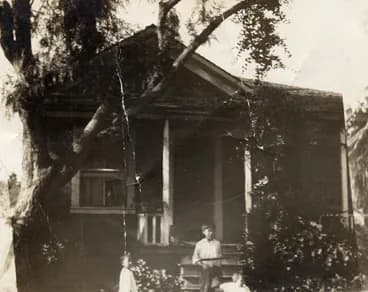
January 16Susan Ahn, Dosan’s first daughter, is born in Los Angeles.
FebruaryHe is re-elected chairman of the Central Congress of the Korean National Association.
June 23He gives his inaugural speech as chairman of the Central Congress of the KNA.
August 31He arrives in Hawaii to resolve a dispute over the leadership of the independence movement there between Syngman Rhee and Park Yong-mahn of the KNA.
January 16Susan Ahn, Dosan’s first daughter, is born in Los Angeles.
FebruaryHe is re-elected chairman of the Central Congress of the Korean National Association.
June 23He gives his inaugural speech as chairman of the Central Congress of the KNA.
August 31He arrives in Hawaii to resolve a dispute over the leadership of the independence movement there between Syngman Rhee and Park Yong-mahn of the KNA.
September 13He gives a speech in Hawaii at the Fort Street Theater about patriotism and the Korean spirit.
October to NovemberHe visits every island and every Korean community in Hawaii to revive their support for the independence movement and the KNA.
DecemberHe departs Hawaii for San Francisco.
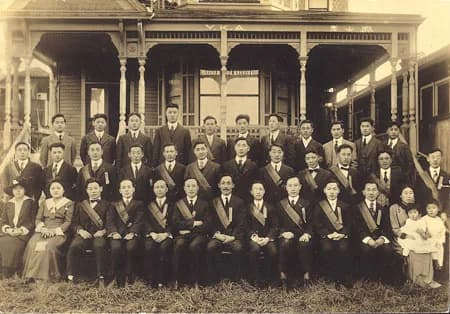
FebruaryHe gives a speech at the Los Angeles branch of the KNA, “The Next Step in the Evolution of Our People.”
April 27He gives a speech in support of establishing a Korean language school for children at the Claremont Student Center.
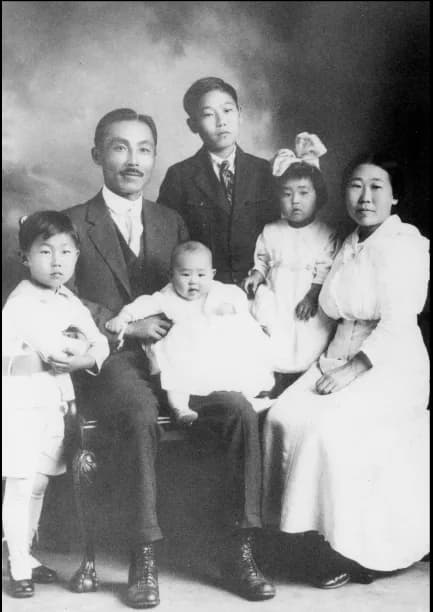
January 10North America Industries, Inc. is established at the Hungsadan headquarters.
May 27Dosan’s second daughter, Soorah, is born in Los Angeles.
August 25He opens a Korean language school for children at the Claremont Student Center.
October 17He visits Mexico and gives a speech about the tasks that lie ahead for Koreans there. He consolidates the Korean communities in Mexico and initiates a new contract between ranchers and Korean laborers. He visits Cuba and organizes a KNA branch there.
April 23He relays the conditions of Koreans in Mexico to the Shin Han Minbo (The New Korea) newspaper.
May 29He departs Mexico for Los Angeles.
August 29He arrives in Los Angeles.
October 9He gives a speech entitled “Our Unfortunate Koreans Have No Pleasure” at the Los Angeles branch of the KNA.
OctoberHe presents a paper entitled “The End of WWI and Our Tasks Ahead.”
April 23He relays the conditions of Koreans in Mexico to the Shin Han Minbo (The New Korea) newspaper.
May 29He departs Mexico for Los Angeles.
August 29He arrives in Los Angeles.
October 9He gives a speech entitled “Our Unfortunate Koreans Have No Pleasure” at the Los Angeles branch of the KNA.
OctoberHe presents a paper entitled “The End of WWI and Our Tasks Ahead.”
November 1He issues a letter to all Koreans in North America, Hawaii and Mexico calling for unity.
November 11(World War I ends.)
November 25He organizes a meeting of the North American KNA branches to decide on sending Korean representatives to the Paris Peace Conference and the Small Nations Alliance Conference.
December 23He calls a meeting of all the KNA branches to discuss the Korean situation.
March 1In Korea, the March 1 Movement begins.
March 9He convenes an emergency meeting of the KNA, which decides to support a Declaration of Independence.
March 13He is elected representative of the KNA at a general meeting. He makes a speech entitled “Let’s Support the 3.1 Movement,” urging Koreans in America to provide economic support.
March 17The KNA decides to dispatch special committee members to all of its branches in North America, Hawaii and Mexico.
March 29He sends a telegram to every participating country at the Paris Peace Conference, expressing the absolute necessity of independence for Korea, and requests permission for Kim Kyu-shik to attend the conference.
April 1He departs San Francisco with $6,000 raised for the purpose of establishing the Korean Provisional Government in Shanghai.
May 25He arrives in Shanghai via Honolulu and Hong Kong.
June 4He gives a speech on ways to advance the independence movement at a church in Shanghai.
June 28He is selected as Minister of the Interior and acting Prime Minister of the Korean Provisional Government in Shanghai.
March 1In Korea, the March 1 Movement begins.
March 9He convenes an emergency meeting of the KNA, which decides to support a Declaration of Independence.
March 13He is elected representative of the KNA at a general meeting. He makes a speech entitled “Let’s Support the 3.1 Movement,” urging Koreans in America to provide economic support.
March 17The KNA decides to dispatch special committee members to all of its branches in North America, Hawaii and Mexico.
March 29He sends a telegram to every participating country at the Paris Peace Conference, expressing the absolute necessity of independence for Korea, and requests permission for Kim Kyu-shik to attend the conference.
April 1He departs San Francisco with $6,000 raised for the purpose of establishing the Korean Provisional Government in Shanghai.
May 25He arrives in Shanghai via Honolulu and Hong Kong.
June 4He gives a speech on ways to advance the independence movement at a church in Shanghai.
June 28He is selected as Minister of the Interior and acting Prime Minister of the Korean Provisional Government in Shanghai.
July 8He issues Republic of Korea treasury bonds in the name of the Minister of the Interior and establishes a poll tax system. He reports to the assembly on the direction of the foreign affairs department and its intent to focus on diplomatic activity in Washington, D.C. and Paris.
July 10The Provisional Government issues its first directive, announcing its secret communication system, and decides to consolidate the government and the Korean National Association of America.
July 13He establishes, in the name of the Minister of the Interior, the Korean Red Cross.
July 17He is appointed chairman of the Provisional Government’s historical archive committee.
August 21He begins publication of “Independence” (Tong Nip), the official newspaper of the Provisional Government, renamed the “Independence Newspaper” (Tong Nip Shin Mun) from September 25.
September 2A public relations committee is established under the Ministry of the Interior.
September 6The assembly enacts a new constitution on the governing structure of the Provisional Government.
September 28He presents a revised constitution and a revised plan for the Provisional Government to the cabinet.
December 7He gives a speech entitled “Let’s Not Deviate” in Shanghai.
January 3He proposes “Six main tasks we must achieve,” military, education, diplomacy, judiciary, treasury and unification, with details for each.
January 19He is elected chair of the Propaganda Bureau.
February 8He participates in a military research committee and organizes the military research bureau.
February 14He resigns his posts, faced with criticism of “practicing provincialism” and of political ambition. The Far East Committee of the Hungsadan conducts its first membership installation ceremony in Shanghai.
March 1He makes a speech as Minister of Labor at the March 1 memorial service, calling for an end to internal strife and for Koreans to focus their energy on the fight against Imperial Japan.
March 10He is appointed Minister of Propaganda and takes on the duties of the Propaganda Bureau.
March 20The Provisional Government institutes an army draft system and begins a registration drive.
April 24He discusses plans for resolving factionalism with Yi Dong-whi, Lee Dong-nyung and Lee Shi-young.
May 7The Provisional Government establishes the post of general commander of the Korea Liberation Army.
January 3He proposes “Six main tasks we must achieve,” military, education, diplomacy, judiciary, treasury and unification, with details for each.
January 19He is elected chair of the Propaganda Bureau.
February 8He participates in a military research committee and organizes the military research bureau.
February 14He resigns his posts, faced with criticism of “practicing provincialism” and of political ambition. The Far East Committee of the Hungsadan conducts its first membership installation ceremony in Shanghai.
March 1He makes a speech as Minister of Labor at the March 1 memorial service, calling for an end to internal strife and for Koreans to focus their energy on the fight against Imperial Japan.
March 10He is appointed Minister of Propaganda and takes on the duties of the Propaganda Bureau.
March 20The Provisional Government institutes an army draft system and begins a registration drive.
April 24He discusses plans for resolving factionalism with Yi Dong-whi, Lee Dong-nyung and Lee Shi-young.
May 7The Provisional Government establishes the post of general commander of the Korea Liberation Army.
May 17He establishes a temporary housing system by dispatching representatives to North Gando, Noryung and South Gando in Manchuria.
August 15He meets a team of American congressmen in Beijing and requests American support for the Provisional Government’s struggle against the Japanese annexation and occupation of Korea. He meets Stephen G. Porter, chairman of the House Foreign Relations Committee.
September 3He gives a speech at Mo A Dang in Shanghai about the Pacific Conference, criticizing the path adopted by the proponents of a “diplomatic solution.”
(The Pacific Conference was proposed by Warren G. Harding, to be held in Washington, D.C. with Britain, France, Italy and Japan to discuss the reduction of arms in the Pacific. After the lack of interest in Korea at the Paris Peace Conference, many in the Provisional Government thought it a good forum for the world powers to take up the Korean question, given the cooling relationship between Japan and the U.S. Syngman Rhee, a proponent of independence through diplomacy, needed a cause he could work on to keep his position in the government, took an interest in the conference, and assigned himself head of the delegation.)
SeptemberHe establishes the Far East branch of the Hungsadan in Shanghai, taking in China, Russia, Korea and Japan.
November 27He gives a speech about forming the Great Independence Party.
December 21He is the opening speaker at a rally to help the Koreans of North Gando, where Japanese soldiers had locked Koreans in a church and burned them to death.
December 29He holds the 7th annual Hungsadan convention in Shanghai, the first outside San Francisco and Los Angeles.
February 27Lee Dong-nyung, Lee Shi-young and Shin Ik-hee refuse the post of Prime Minister of the Provisional Government.
May 11He resigns as Minister of Labor.
May 12He and Yeo Woon-hyung are the opening speakers at a rally at Sang Hyun Dang in Shanghai, calling for the formation of the Kuk Min Dae Pyo Hoe Ui (Assembly of Representatives), and organize an action committee to pursue it.
May 29The ad hoc committee for the Assembly of Representatives is formed.
February 27Lee Dong-nyung, Lee Shi-young and Shin Ik-hee refuse the post of Prime Minister of the Provisional Government.
May 11He resigns as Minister of Labor.
May 12He and Yeo Woon-hyung are the opening speakers at a rally at Sang Hyun Dang in Shanghai, calling for the formation of the Kuk Min Dae Pyo Hoe Ui (Assembly of Representatives), and organize an action committee to pursue it.
May 29The ad hoc committee for the Assembly of Representatives is formed.
July 7He sends his “Letter for My Comrades” to Hungsadan members in North America, Hawaii and Mexico.
September 1He gives a speech at a meeting called by the supporters of the Pacific Conference.
September 14He applies for an American visa. The application is denied.
NovemberHe serves as principal of the In Sung School in Shanghai for nine months.
January 23He is appointed president of the Tong Ui Gun, an independence army in Manchuria.
February 12The Su Yang Dong Mang Hoe (Character Cultivation Alliance) is formed at Yi Kwang-su’s home in Seoul.
June 6He is elected acting chairman of the first convention of the action committee for the Assembly of Representatives.
June 16The Provisional Government decides on a vote of no confidence against Syngman Rhee, leading to his impeachment.
January 23He is appointed president of the Tong Ui Gun, an independence army in Manchuria.
February 12The Su Yang Dong Mang Hoe (Character Cultivation Alliance) is formed at Yi Kwang-su’s home in Seoul.
June 6He is elected acting chairman of the first convention of the action committee for the Assembly of Representatives.
June 16The Provisional Government decides on a vote of no confidence against Syngman Rhee, leading to his impeachment.
JulyHe organizes the Si Sa Chaik Jin Hoe (Current Affairs Truth Commission) to resolve the differences of ideas in the independence movement, attended by thirty people including Lee Dong-nyung, Yeo Woon-hyung, Kim Ku and Cha I-seok. Dosan is elected its chairman.
August 14The action committee meeting for the Assembly of Representatives opens.
NovemberHe takes part in a study comparing and analyzing ideas for revolution.
January 3The Assembly of Representatives is formed and holds its first session. Two hundred leaders from seventy organizations attend.
January 18He is elected Vice Chair of the Assembly of Representatives.
January 3The Assembly of Representatives is formed and holds its first session. Two hundred leaders from seventy organizations attend.
January 18He is elected Vice Chair of the Assembly of Representatives.
May 15The Assembly of Representatives is dissolved after 63 sessions.
DecemberHe begins touring Manchuria for potential sites for the “Ideal Village,” a model community for the independence movement.
JanuaryHe continues his tour of Manchuria for sites for the “Ideal Village.”
FebruaryHe presents a paper in Shanghai on unification and initiates a unification movement of nationalists, communists and anarchists, hoping to unify ideologies and strategies under one independence movement.
March 3He opens the Dong Myung School in Nanjing, supported by the Hungsadan in America.
April 8He meets Yi Kwang-su in Beijing and agrees to adopt the Character Cultivation Alliance as part of the Hungsadan’s Far East branch; they discuss publishing a magazine.
JanuaryHe continues his tour of Manchuria for sites for the “Ideal Village.”
FebruaryHe presents a paper in Shanghai on unification and initiates a unification movement of nationalists, communists and anarchists, hoping to unify ideologies and strategies under one independence movement.
March 3He opens the Dong Myung School in Nanjing, supported by the Hungsadan in America.
April 8He meets Yi Kwang-su in Beijing and agrees to adopt the Character Cultivation Alliance as part of the Hungsadan’s Far East branch; they discuss publishing a magazine.
October 30The 4th Hungsadan Far East convention is held in Nanjing.
November 22He departs for Hawaii.
December 16He arrives in San Francisco.
January 20He writes to Lee Yu-pil and Cho Sang-sup, recommending Park Eun-shik and Lee Sang-ryong as transitional heads of the Provisional Government.
January 23He writes a series of articles, “Letter to My Fellow Countrymen,” in the Dong A Ilbo in Korea. The series is stopped by the Japanese Governor General.
March 23The Provisional Government’s congress impeaches Syngman Rhee and elects Park Eun-shik president.
April to JulyHe tours the Korean communities of the eastern United States: New York, New Haven, Boston and Philadelphia.
January 20He writes to Lee Yu-pil and Cho Sang-sup, recommending Park Eun-shik and Lee Sang-ryong as transitional heads of the Provisional Government.
January 23He writes a series of articles, “Letter to My Fellow Countrymen,” in the Dong A Ilbo in Korea. The series is stopped by the Japanese Governor General.
March 23The Provisional Government’s congress impeaches Syngman Rhee and elects Park Eun-shik president.
April to JulyHe tours the Korean communities of the eastern United States: New York, New Haven, Boston and Philadelphia.
May 22He visits Philip Jaisohn (Suh Jae-pil) in Philadelphia.
June 17He gives a speech entitled “Our Ideological Spirit and Its Fulfilment” to the Korean Students Association convention in Chicago.
June to JulyHe tours the Salt Lake City area with Jang Ri-wook to gather information on how the Mormon Church manages its community, for use in establishing a base for independence work.
August to NovemberHe tours the Korean rice farms of northern California.
February 26He departs San Pedro for Shanghai. It is the last time Dosan’s children will ever see him. Helen Ahn sees him in San Francisco a few days later, because the S.S. Sonoma broke down and docked for repairs.
March 8He gives a speech at a church in Hawaii for the 7th anniversary of the March 1st Movement.
March 13He writes Helen Ahn a letter: he has had to leave Hawaii under orders of the U.S. immigration officials and will make an unplanned trip to Australia via American Samoa and Fiji.
March 23He arrives in Sydney, Australia, and gathers information on developing raw land.
April 14He departs Sydney for China.
May 8The Provisional Government appoints Dosan head of its State Department while he is absent.
May 16He arrives in Shanghai and declines the appointment.
May 20He publishes Dong Gwang magazine and contributes articles under the pen name San Ong, among them “Unity and Division” (May), “Are You an Owner?” (June), “Heartless Society and Compassionate Society” (June), “Leader, Requisite for Unity” (August), “From Artificiality to Conscientiousness” (September) and “Korean Students Today” (December).
February 26He departs San Pedro for Shanghai. It is the last time Dosan’s children will ever see him. Helen Ahn sees him in San Francisco a few days later, because the S.S. Sonoma broke down and docked for repairs.
March 8He gives a speech at a church in Hawaii for the 7th anniversary of the March 1st Movement.
March 13He writes Helen Ahn a letter: he has had to leave Hawaii under orders of the U.S. immigration officials and will make an unplanned trip to Australia via American Samoa and Fiji.
March 23He arrives in Sydney, Australia, and gathers information on developing raw land.
April 14He departs Sydney for China.
May 8The Provisional Government appoints Dosan head of its State Department while he is absent.
May 16He arrives in Shanghai and declines the appointment.
May 20He publishes Dong Gwang magazine and contributes articles under the pen name San Ong, among them “Unity and Division” (May), “Are You an Owner?” (June), “Heartless Society and Compassionate Society” (June), “Leader, Requisite for Unity” (August), “From Artificiality to Conscientiousness” (September) and “Korean Students Today” (December).
June 10The Mansei (Long Live Korea) movement takes place as a follow-up to the March 1 Movement. On the day of the funeral of Soon Jong, the last king of Joseon, about 24,000 people gather in the Jongno area of Seoul and shout Mansei as his procession passes. It is remembered as the 6.10 Mansei Movement.
July 8He gives the opening speech at a rally at Samil Dang in Shanghai on “The Existence of the Korean Provisional Government and the Great Revolutionary Party.”
July 19A financial support group for the Provisional Government holds a general meeting at Samil Dang.
September 11He lectures on the necessity of forming a Yu Il (single) Independence Party.
September 26His third son, Pil-young, is born in Los Angeles.
October 16He establishes a support group in Beijing for forming the Great Independence Party.
DecemberHe leaves for Manchuria to continue seeking sites for his “Ideal Village” program.
January 27He lectures on “The Joseon Independence Movement, Past and Present” in Jilin. He is arrested by the Japanese during the lecture and released after twenty days.
FebruaryHe lectures across Manchuria and urges “great unity.”
March 21He forms a support group for the One Korea Independence Party in Shanghai.
April 1A farmers’ organization, the Nong Min Ho Jo Sa, is established to support the welfare of Manchurian farmers.
May 8He establishes a support group for the One Korea Independence Party in Guangdong.
January 27He lectures on “The Joseon Independence Movement, Past and Present” in Jilin. He is arrested by the Japanese during the lecture and released after twenty days.
FebruaryHe lectures across Manchuria and urges “great unity.”
March 21He forms a support group for the One Korea Independence Party in Shanghai.
April 1A farmers’ organization, the Nong Min Ho Jo Sa, is established to support the welfare of Manchurian farmers.
May 8He establishes a support group for the One Korea Independence Party in Guangdong.
JulyHe establishes a support group for the One Korea Independence Party in Wuhan.
August 1Dong Gwang magazine suspends publication after 16 issues.
September 27A support group for the One Korea Independence Party is formed in Nanjing.
NovemberThe support groups for the One Korea Independence Party form a federation in Shanghai.
May 20He strongly calls for the cooperation of China and Korea in an editorial in a Chinese newspaper, the Se Gye, and a Korean newspaper, the Joong Ang Ilbo.
MayHe establishes a support group in Jilin, Manchuria for the One Korea Independence Party.
May 20He strongly calls for the cooperation of China and Korea in an editorial in a Chinese newspaper, the Se Gye, and a Korean newspaper, the Joong Ang Ilbo.
MayHe establishes a support group in Jilin, Manchuria for the One Korea Independence Party.
December 20He speaks to the Yon Hee School soccer team: “an individual gives himself to the nation, thereby completing his duties to himself and his duties to mankind.” He proposes the idea of Dae Gong Ju Ui, the Great Republic.
February 8He writes to the Hungsadan members in America, clarifying that the Hungsadan is not an organization for character cultivation but an organization for training leaders for the revolution.
FebruaryHe visits the Philippine Islands and establishes a Korean National Association branch.
March 30He returns to China.
February 8He writes to the Hungsadan members in America, clarifying that the Hungsadan is not an organization for character cultivation but an organization for training leaders for the revolution.
FebruaryHe visits the Philippine Islands and establishes a Korean National Association branch.
March 30He returns to China.
October 26The support group for the One Independence Party of Shanghai is dissolved.
NovemberHe combines all the entities that agree with the principles of the One Independence Party and initiates the forming of the Korean Independence Party.
JanuaryThe Hungsadan Far East branch holds its 6th annual convention.
January 25The Korean Independence Party is formed by 25 nationalists who support Dae Gong Ju Ui, the Great Republic.
FebruaryThe Provisional Government opposes forming the Korean Independence Party, and the party is dissolved.
JanuaryThe Hungsadan Far East branch holds its 6th annual convention.
January 25The Korean Independence Party is formed by 25 nationalists who support Dae Gong Ju Ui, the Great Republic.
FebruaryThe Provisional Government opposes forming the Korean Independence Party, and the party is dissolved.
April 5He invites representatives of every entity involved in independence work to a meeting in Chun Jin in June.
June 15The Korean Great Independence Party issues the magazine Joseon ji Hyeol (Blood of Joseon).
DecemberPlans for the Dong In Ho Jo Sa, a financial partnership with Hungsadan members, are announced.
JanuaryThe Hungsadan Far East holds its 7th annual convention.
January 1Dong Gwang magazine resumes publication.
FebruaryHe contributes an article to Dong Gwang entitled “My Pleading with Youth: About Character Building, Training as a Unit.”
March 25The Dong In Ho Jo Sa (Mutual Cooperative Organization) is renamed the Gong Pyong Sa (Fair Practice Organization) and holds a general meeting at the Hungsadan headquarters.
JanuaryThe Hungsadan Far East holds its 7th annual convention.
January 1Dong Gwang magazine resumes publication.
FebruaryHe contributes an article to Dong Gwang entitled “My Pleading with Youth: About Character Building, Training as a Unit.”
March 25The Dong In Ho Jo Sa (Mutual Cooperative Organization) is renamed the Gong Pyong Sa (Fair Practice Organization) and holds a general meeting at the Hungsadan headquarters.
May 11He attends the Kuomintang party convention and begins to lobby for Korean representation in Manchuria.
July 18A coalition of Korean entities is formed to negotiate more effectively with the Chinese authorities.
October 27He invites Chinese representatives to discuss forming a Korea-China coalition to fight Imperial Japan.
NovemberHe meets Kuomintang member Wang Jingwei and discusses organizing a United Front Alliance against Japan together.
January 8Lee Bong-chang attempts to kill the Japanese Emperor Hirohito in Tokyo with a bomb, fails, and is arrested.
January 18The Hungsadan Far East holds its 8th annual convention in Shanghai.
April 29Yoon Bong-gil assassinates a Japanese general in a bombing at Hongkew Park in Shanghai. Dosan is arrested by the French police and turned over to the Japanese authorities.
May 30He is transferred to a Japanese prison in Incheon, Korea.
January 8Lee Bong-chang attempts to kill the Japanese Emperor Hirohito in Tokyo with a bomb, fails, and is arrested.
January 18The Hungsadan Far East holds its 8th annual convention in Shanghai.
April 29Yoon Bong-gil assassinates a Japanese general in a bombing at Hongkew Park in Shanghai. Dosan is arrested by the French police and turned over to the Japanese authorities.
May 30He is transferred to a Japanese prison in Incheon, Korea.
June 2A group is formed in Shanghai to free Dosan.
June 7He is transferred to Seoul.
July 25He is found guilty of violating the Peace Preservation Law and incarcerated in Seodaemun prison in Seoul.
December 19The Japanese court in Seoul sentences him to four years in prison.
He gives up his appeal and is transferred to Daejeon prison.
He continues to serve his term in Daejeon prison.
February 10He is released from Daejeon prison and stays with Park Heung-shik in Seoul.
February 11He arrives in Pyongyang and stays with Kim Dong-won.
February 14He gives a sermon at Ki Yang Church in his hometown.
February 16He leaves for Seoul.
February 10He is released from Daejeon prison and stays with Park Heung-shik in Seoul.
February 11He arrives in Pyongyang and stays with Kim Dong-won.
February 14He gives a sermon at Ki Yang Church in his hometown.
February 16He leaves for Seoul.
FebruaryHe tours all of Korea, and afterwards builds a retreat, Song Tae San Jang, on Dae Bo Mountain in Pyongnam Province, and takes up residence in the mountains.
September 5He is invited by the Andong Youth Organization to lecture to an audience of about 2,000. He speaks about the development of manpower and Dae Gong-ism, the Great Republic concept.
November 13A welcoming ceremony is planned for Dosan in Pyongyang, and halted by the Japanese police.
February 20He leaves for Seoul to tour the southern provinces.
FebruaryHe arrives in Seoul.
February 20He leaves for Seoul to tour the southern provinces.
FebruaryHe arrives in Seoul.
AugustHe sends a telegram to Sohn Ki-jung congratulating him on his gold medal in the marathon at the Berlin Olympics.
June 28He is accused of holding secret meetings and arrested with the members of the Dong Woo Hoe (Friendship Society); 150 people are arrested. The Japanese declare the Dong Woo Hoe the same kind of organization as the Hungsadan and accuse its members of violating the Peace Preservation Law.
August 10He is incarcerated at Jongno police station.
June 28He is accused of holding secret meetings and arrested with the members of the Dong Woo Hoe (Friendship Society); 150 people are arrested. The Japanese declare the Dong Woo Hoe the same kind of organization as the Hungsadan and accuse its members of violating the Peace Preservation Law.
August 10He is incarcerated at Jongno police station.
November 1He is transferred to Seodaemun prison.
December 24He is transferred to Keijo Hospital, now Seoul National University Hospital, because of his severe illnesses. He had been arrested more than five times over his years of independence work, and his health had deteriorated with each arrest and the imprisonment and torture that followed. He suffered from tuberculosis, a common ailment in Korea at the time, compounded by pleuritis and peritonitis.
JanuaryForty-two members of the Dong Woo Hoe are found guilty of violating the Peace Preservation Law.
March 10He dies in the hospital.
March 12He is buried in Mangwoo-ri public cemetery.
JanuaryForty-two members of the Dong Woo Hoe are found guilty of violating the Peace Preservation Law.
March 10He dies in the hospital.
March 12He is buried in Mangwoo-ri public cemetery.
March 13Leftist groups hold a memorial service for Dosan in Hankou, China. The Korean National Association of Hawaii holds a memorial service the same day.
March 22A memorial service is held in Los Angeles.
April 10A memorial service is held in Chongqing, China.
March 10The Dosan Ahn Chang-ho Memorial Foundation is established in Korea.
The Hungsadan headquarters moves from Los Angeles to Seoul.
March 1He is honored by the South Korean government with a Presidential Medal for his contribution to nation building.
Lee Hye Ryon (Helen Ahn) makes her first visit to Korea since she left for America with Dosan in 1902.
April 21Lee Hye Ryon dies in Los Angeles.
April 6Construction of Dosan Park begins at Sinsa-dong in Gangnam-gu, Seoul.
August 22The Dosan Ahn Chang-ho Memorial Foundation is revived.
November 10The remains of Dosan and Lee Hye Ryon are interred together at the opening-day dedication ceremony of Dosan Park.
March 9The Dosan Thoughts Study Center, later renamed the Dosan Scholar Association, is established.
December 23Construction of the Dosan Ahn Chang-ho Memorial Hall begins.
November 9The Dosan Ahn Chang-ho Memorial Hall opens.
The end of the record